 un progetto di




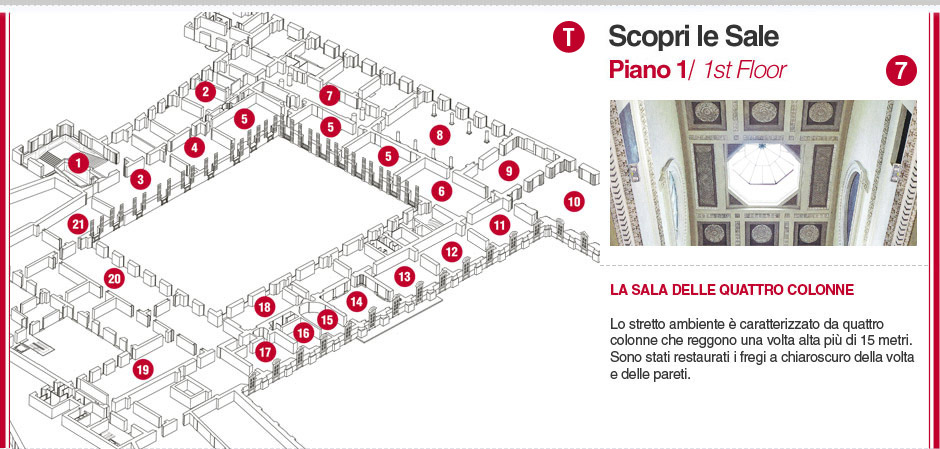
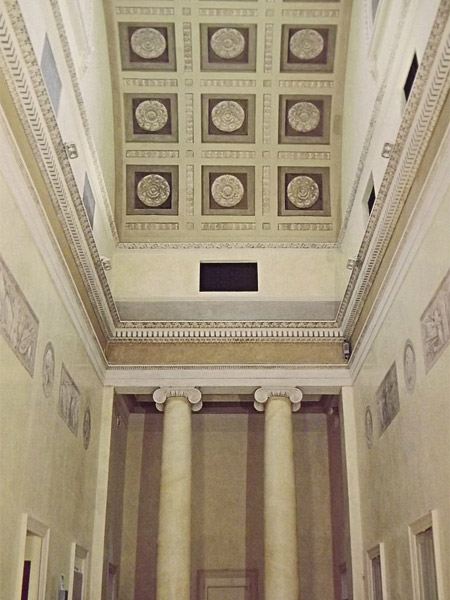
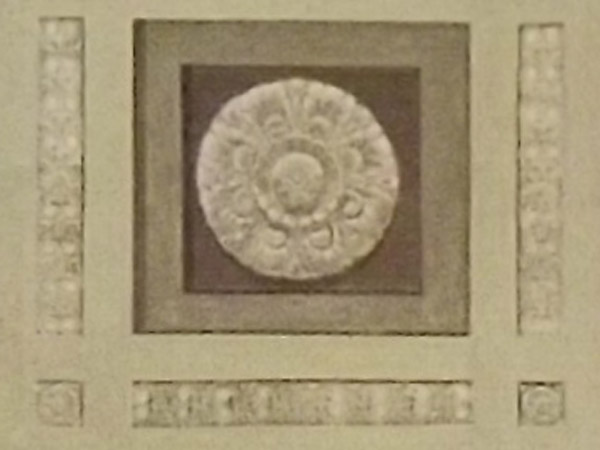
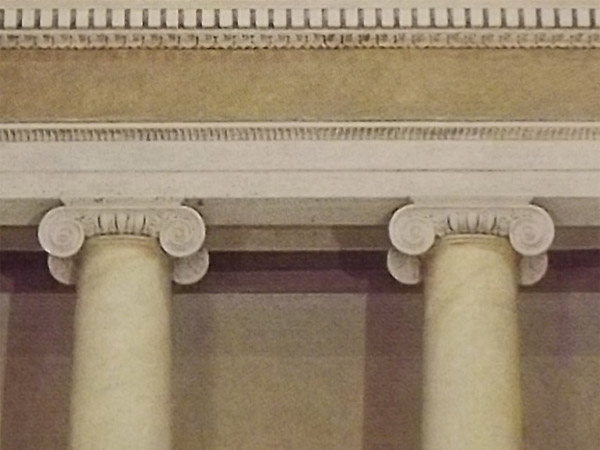
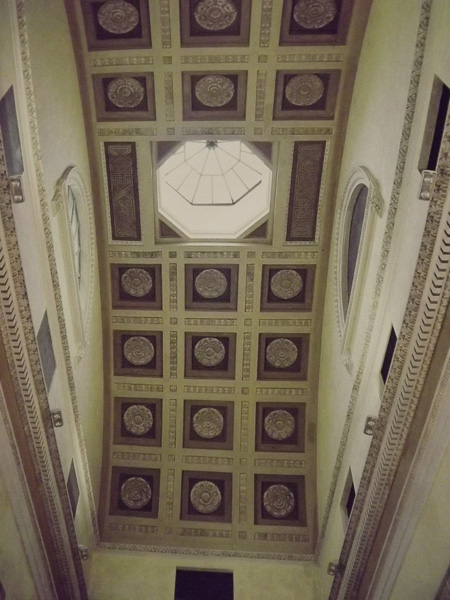
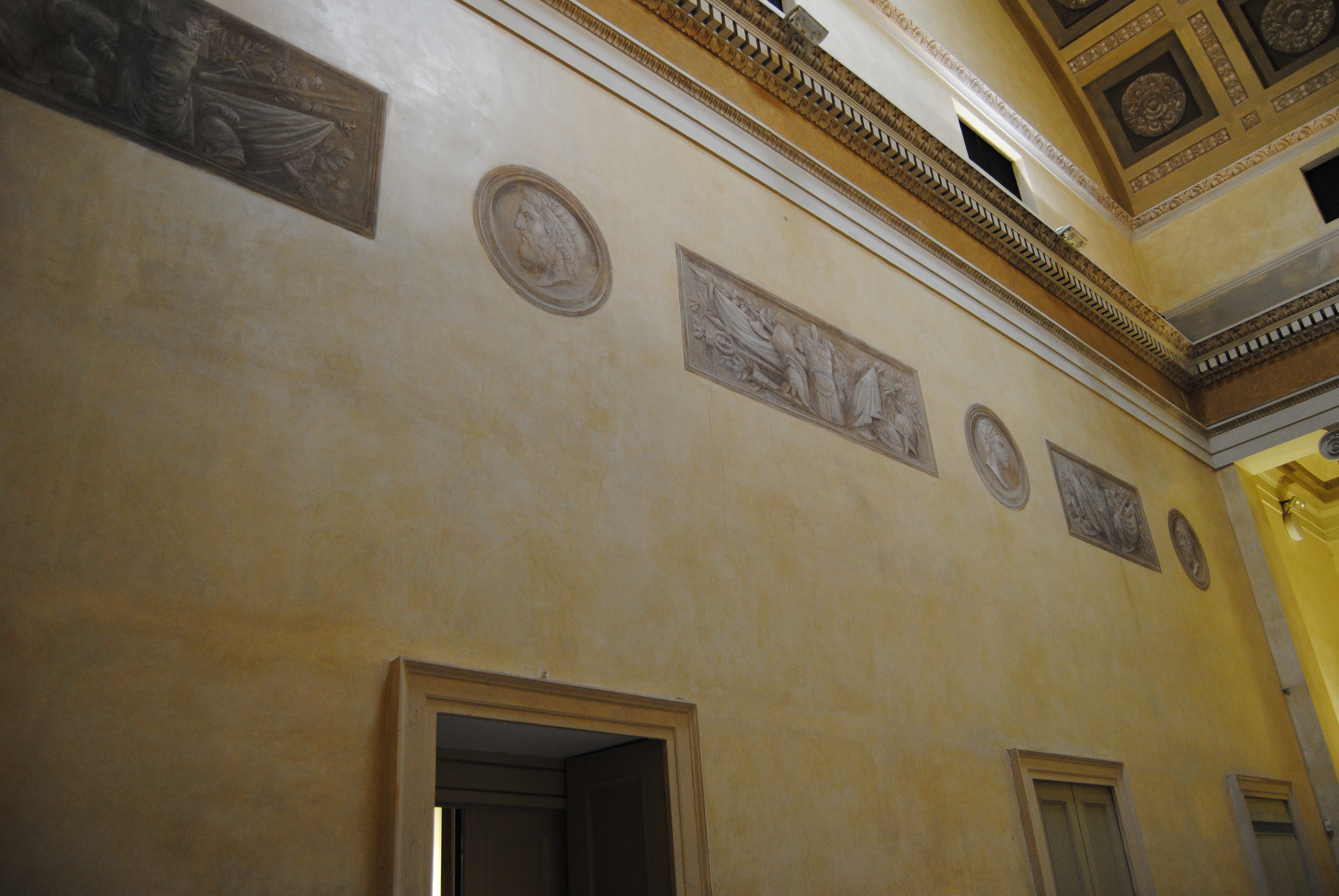
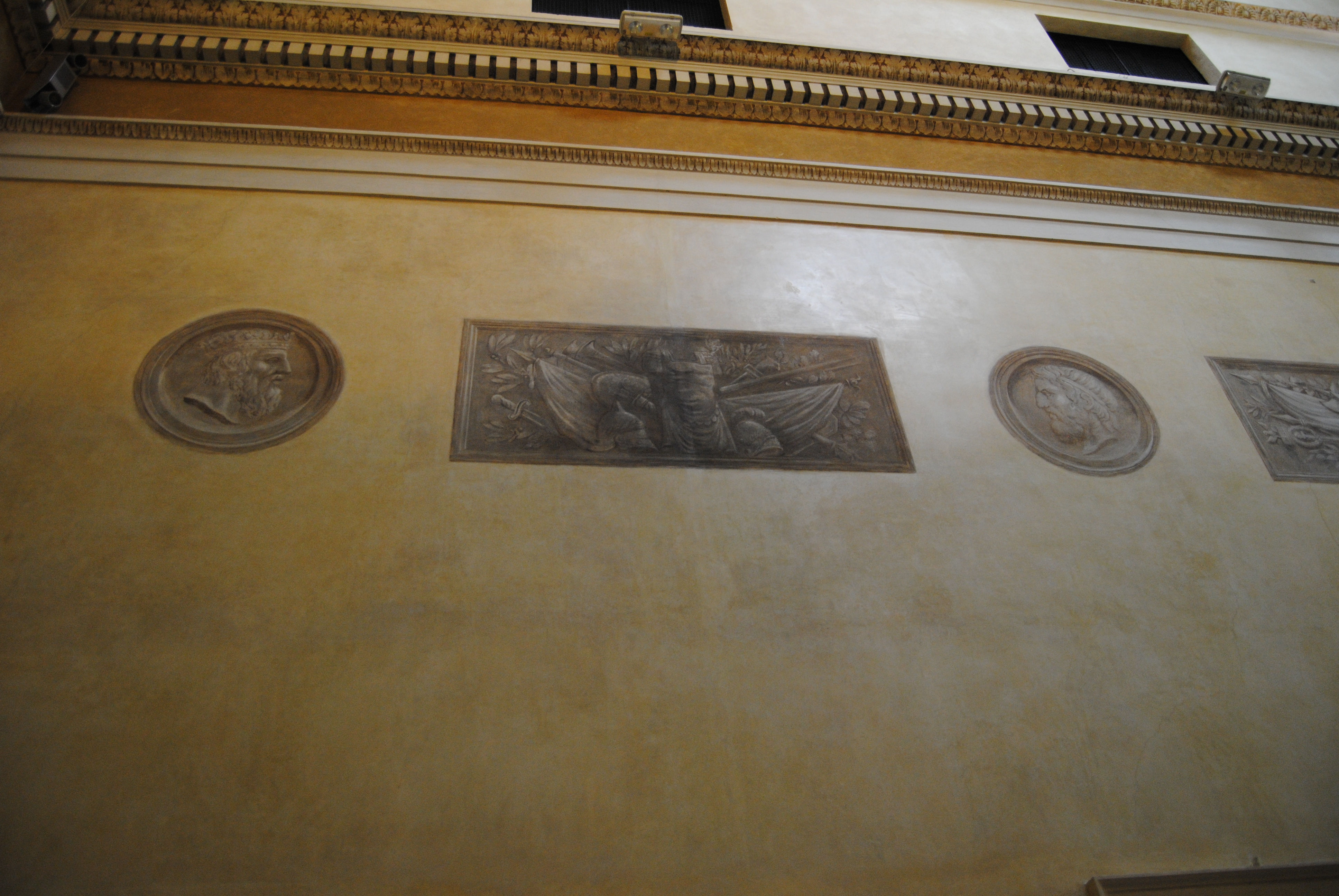
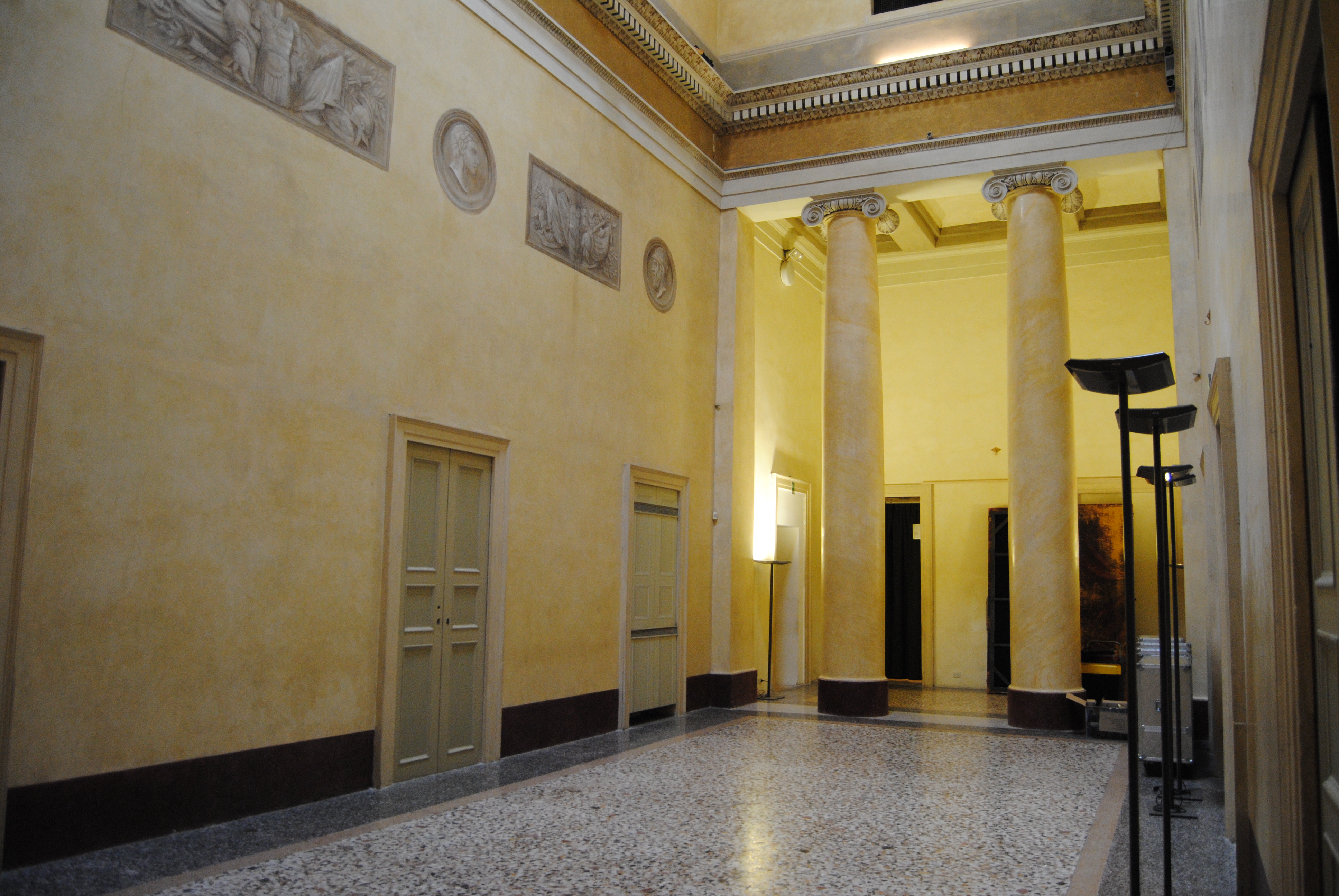
La Sala delle Quattro Colonne è un atrio magniloquente costruito da Tazzini come punto di arrivo di uno scalone secondario; decorata di marmorino giallo. È probabile che la sala servisse come disimpegno dell'Appartamento di Riserva che apre le sue finestre sulla “elle” formata dalle attuali via Pecorari e via Rastrelli. L'ambiente, lungo e stretto e altissimo, è caratterizzato da colonne poderose che si fronteggiano; hanno basi che fingono il porfido e si concludono in alto con forti volute ioniche. Su ogni lato lungo della sala tre medaglioni e due panoplie in monocromo ne sottolineano la prevalenza longitudinale. Oltre il cornicione che segna il passaggio dal primo al secondo piano si aprono due grandi vetrate a ventaglio. Il soffitto, un arco interrotto da un lucernario ottagonale, è decorato da rosoni inscritti in quadrati, color seppia. Si guarda a Roma con la sua capacità di costruire e organizzare gli spazi, di ordinare i volumi, infatti ricorda il Pantheon. Dall'atrio delle Quattro Colonne un piccolo passaggio voltato ci riconduce alla Prima Sala degli Arazzi.
The Hall of the Four Columns is a grandiose hall built by Tazzini as the arrival point of a secondary staircase; decorated with yellow marmorino. It was probably used as a detachment of the Guesthouse, which opens its windows to the "L" formed by current via Pecorari and Via Rastrelli. This long, narrow and especially high hall is characterized by imposing columns facing each other; they have bases that imitate porphyry and end up at the top with solid Ionic volutes. Along each longer side of the hall there are three medallions and two monochromatic panoplies that are meant to emphasize the longitudinal dimension. Beyond the cornice that marks the transition from the first to the second floor, there are two large fan-shaped windows. The ceiling, an arch interrupted by an octagonal skylight, is decorated with sepia tinted rose windows that are inscribed into squares. The inspiration comes from ancient Rome and its ability in building and organizing space, in arranging volumes. From the Hall of the Four Columns starts a small passage back to the first Hall of Tapestries.